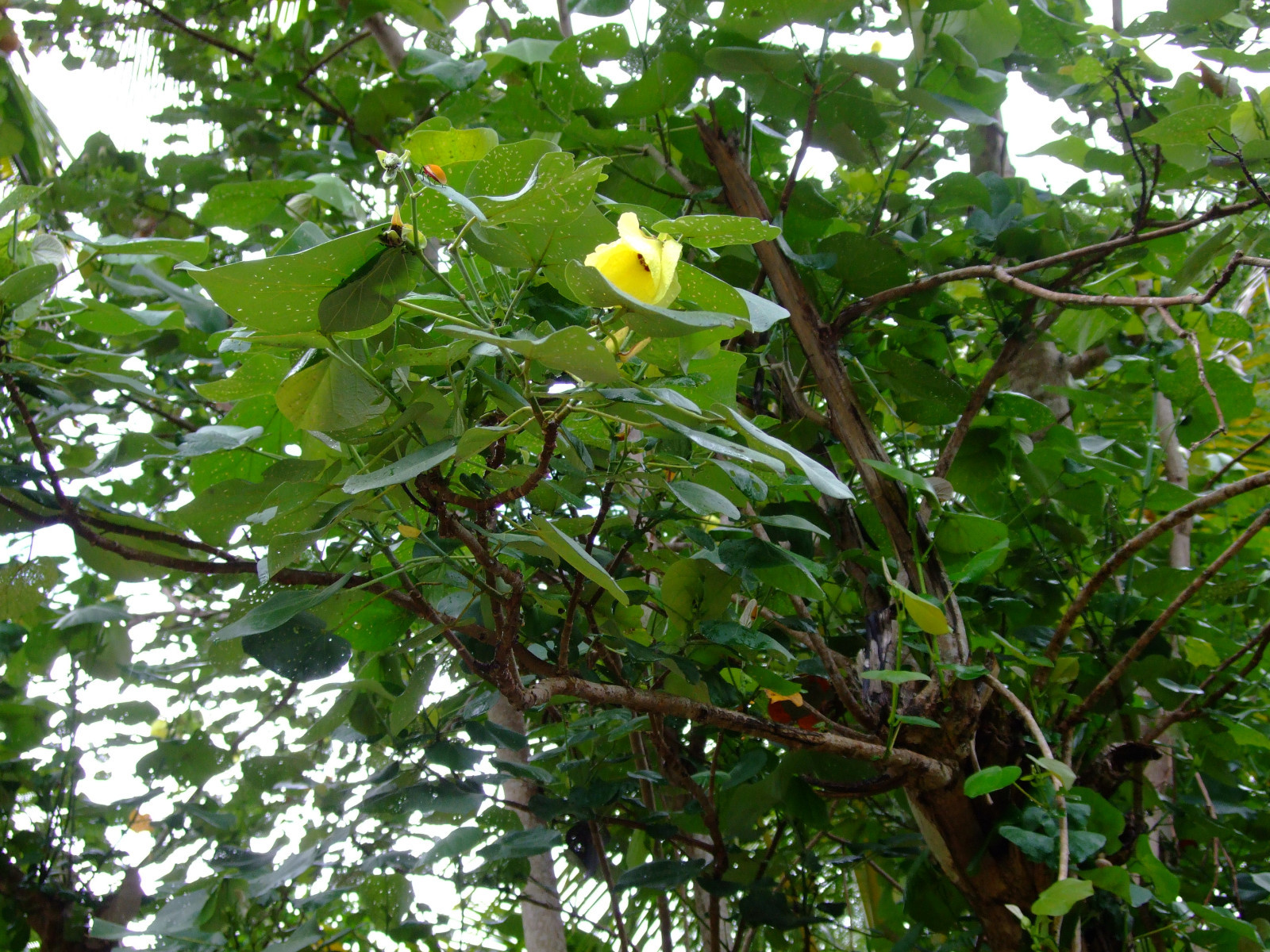
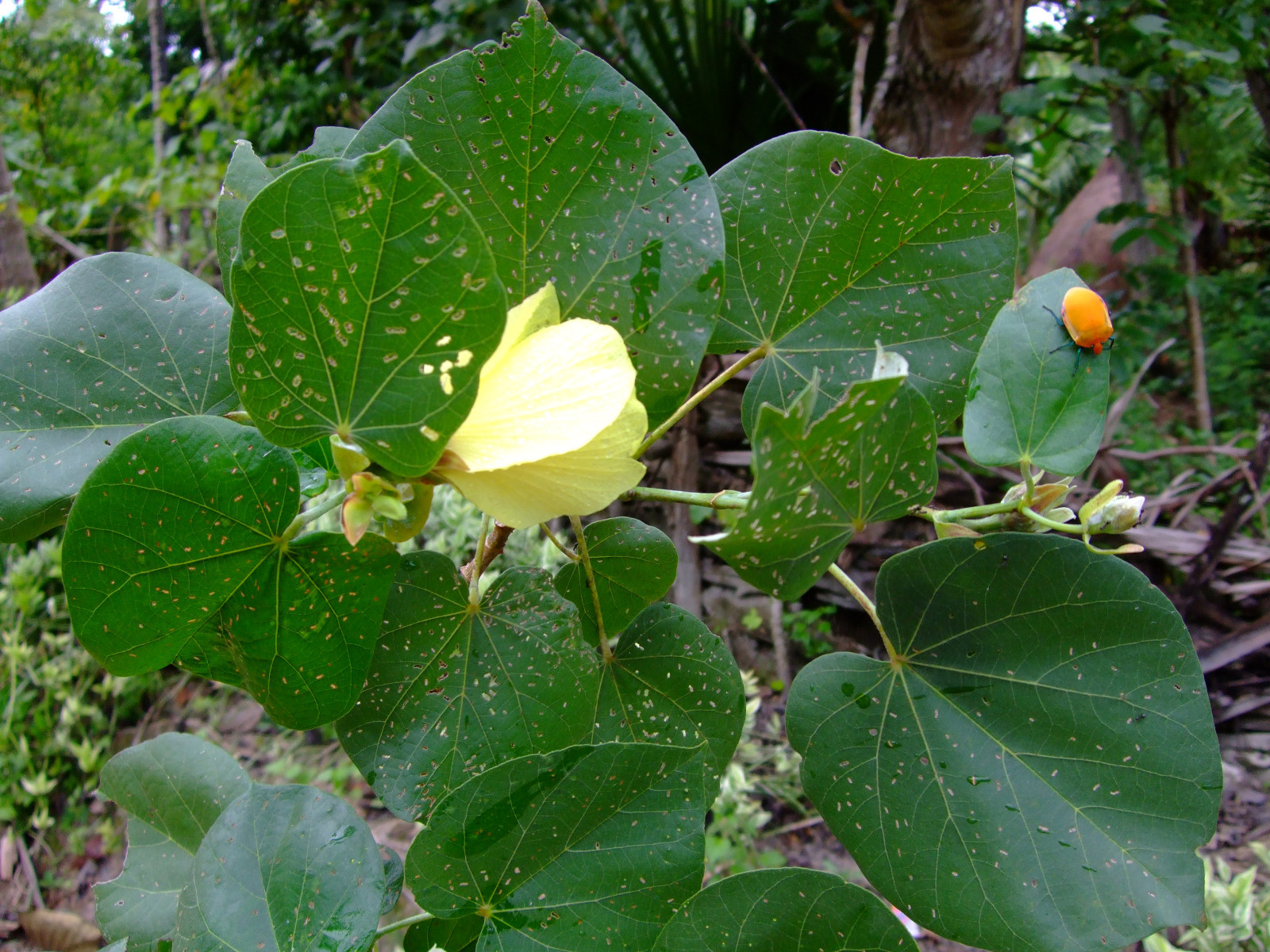
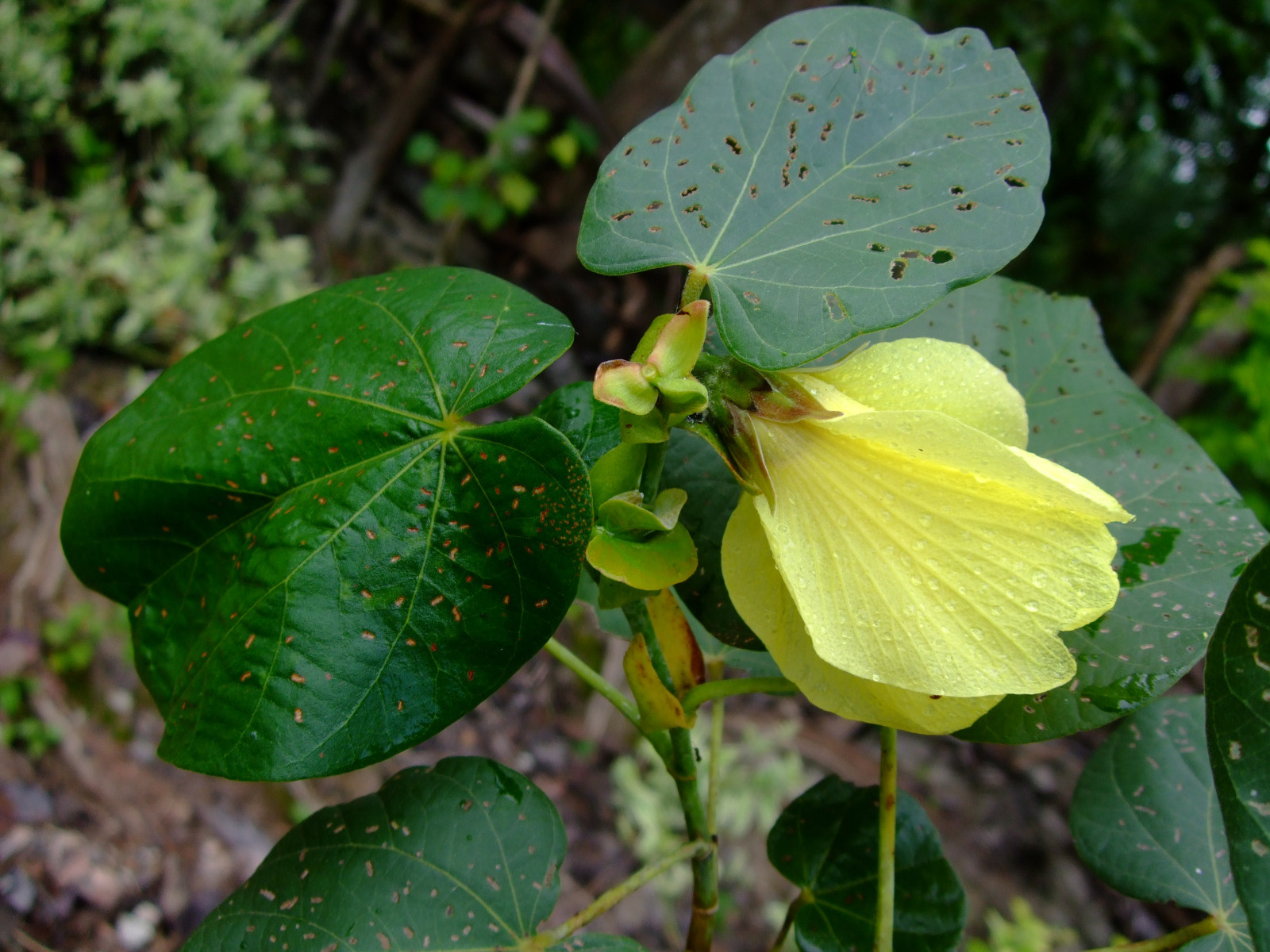
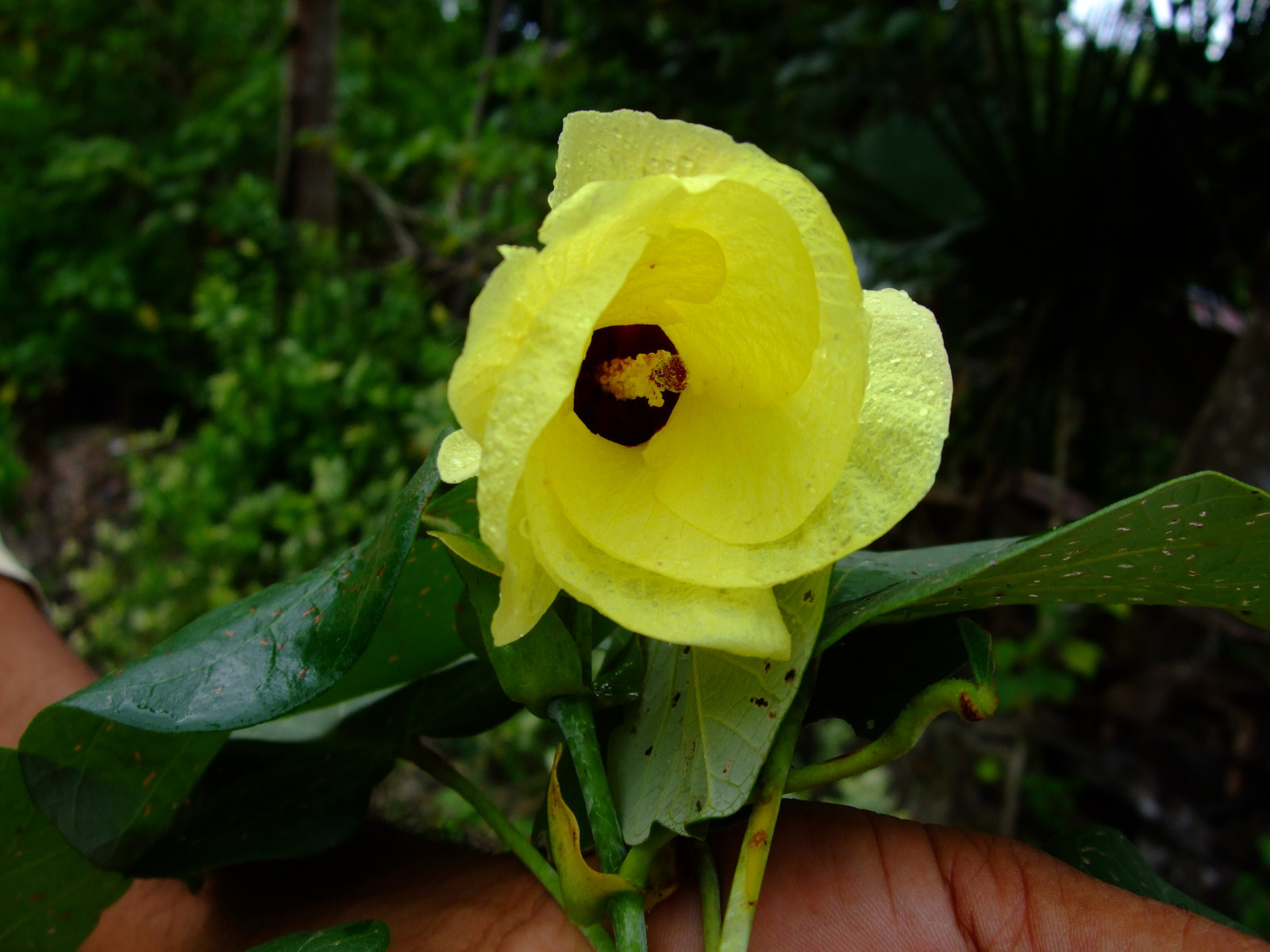
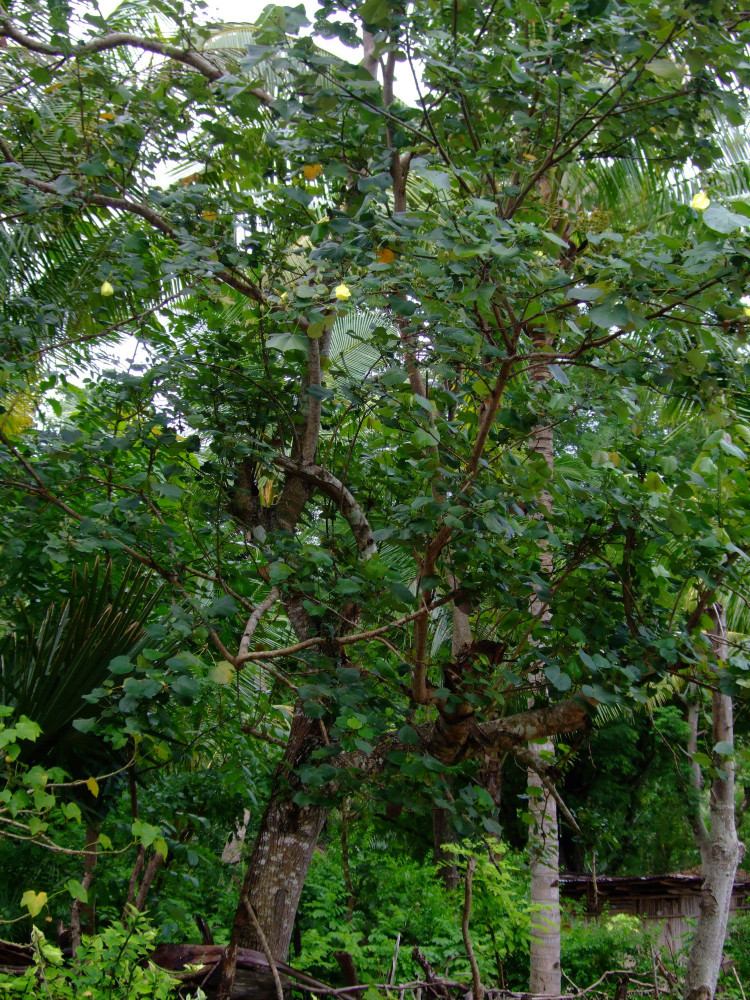
Hibiscus tiliaceus, better known as hibiscus, typically grows in tropical climates. It features heart-shaped leaves, yellow flowers, and can grow up to 15 meters tall with dense, trailing brances. It typically grows along beaches and roadsides as a shade tree, as its roots don't cause significant damage. Besides its use as a shade tree and abrasion preventative, the hibiscus plant also offers benefits for fever, flu, and cough relief. Its leaves are crushed and the resulting decoction is drunk to relieve pain.
Hibiscus tiliaceus merupakan suatu tanaman yang lebih dikenal dengan sebutan waru, tanaman ini biasanya tumbuh di daerah dengan iklim tropis. Biasanya tanaman ini memili ciri - ciri daun berbentuk jantung, bunga berwarna kuning, dan tinggi bisa mencapai 15 meter dengan cabang rintang dan rimbun. Tanaman ini biasanya tumbuh di tepi pantai, pinggir jalan sebagai pohon perindang karena akarnya tidak terlalu merusak jalan. Selain bermanfaat sebagai tanaman perindang dan pencegah abrasi, tanaman waru ini juga memiliki manfaat sebagai pereda demam, flu dan batuk dengan memanfaatkan daunnya dengan cara direbut, kemudian air dari rebusan tersebut diminum untuk meredakan sakit.

Hibiscus - Leaf
Ru Kabaru