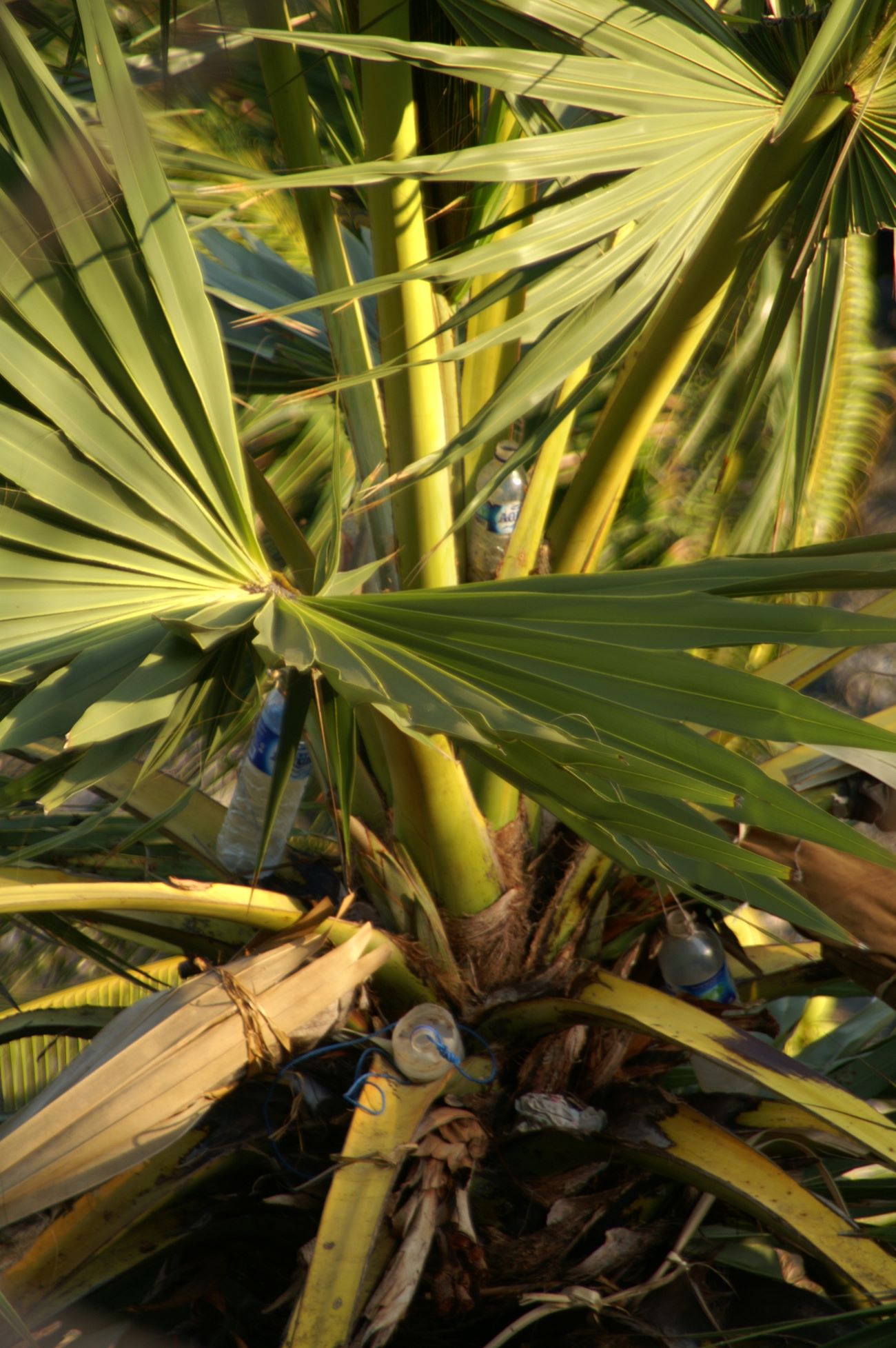
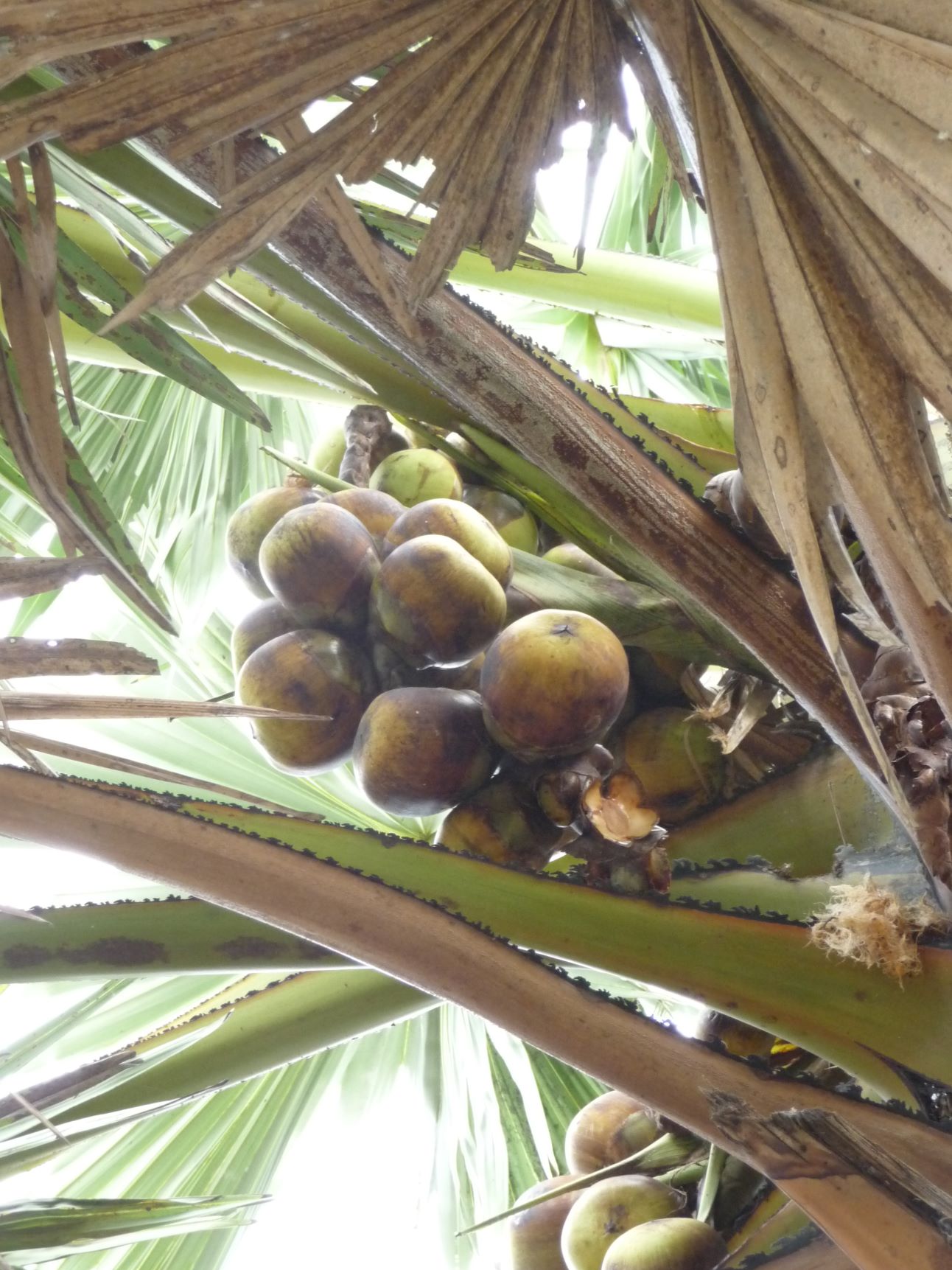
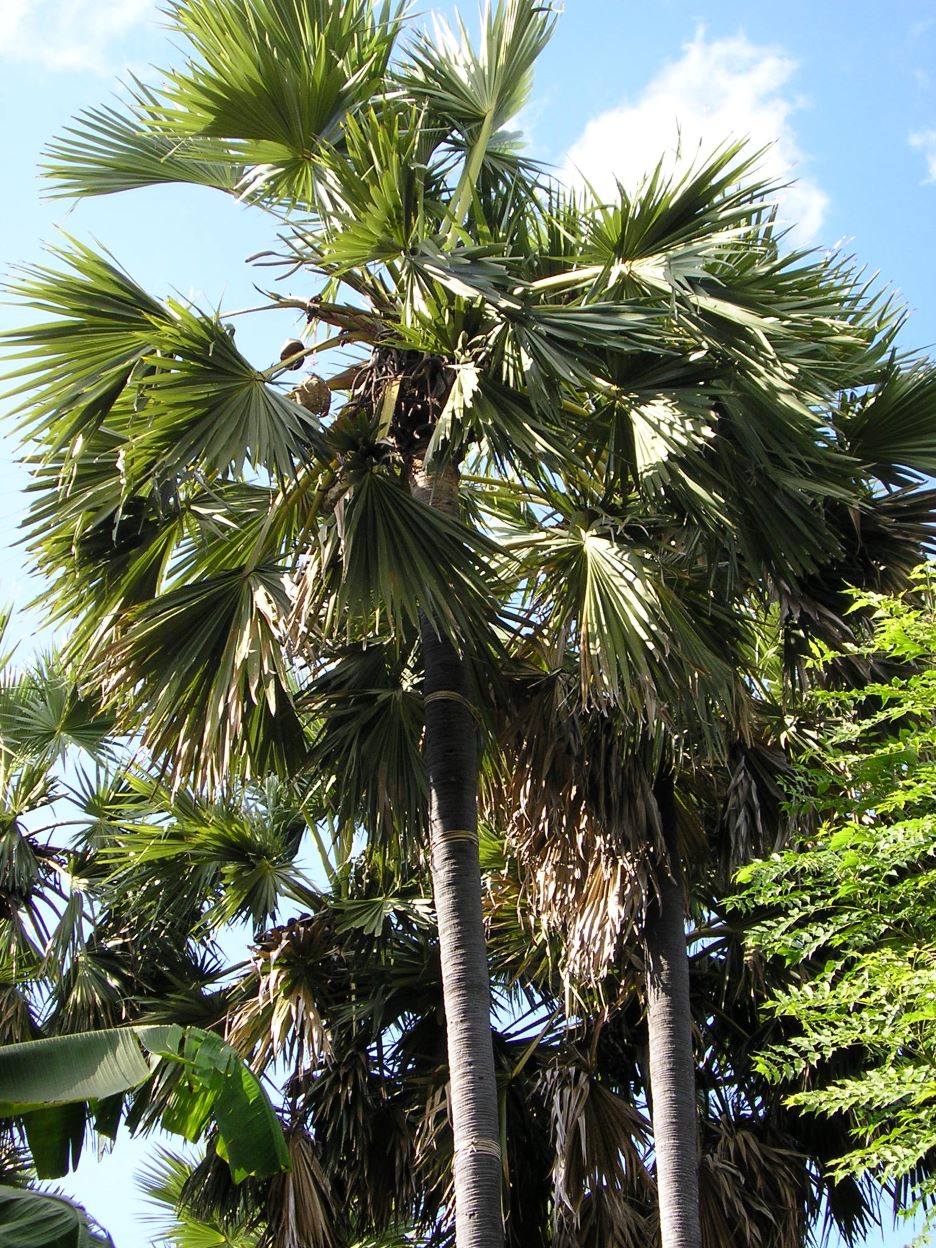
Borassus flabellifer is commonly called the lontar palm, siwalan palm, or large fan palm. This plant typically grows to approximately 18 meters tall and 7.5 meters wide. Its straight, single, gray trunk (up to 9 meters in diameter) is surrounded by leaf spots and a rounded crown of stiff, palmate leaves (each 2.4-3.5 meters long) with thorny stalks. This palm is native to India, Sri Lanka, and Southeast Asia. Nearly white flowers appear in clusters hanging from the leaf axils in late rainy season to early dry season. Male and female flowers grow on separate (dioecious) trees. Male flowers are small (less than 1/2 inch). Female flowers are larger (up to 1 inch) and produce fleshy, slightly round brown fruit (up to 6-8 inches wide). The sex of the tree can only be determined after flowering.
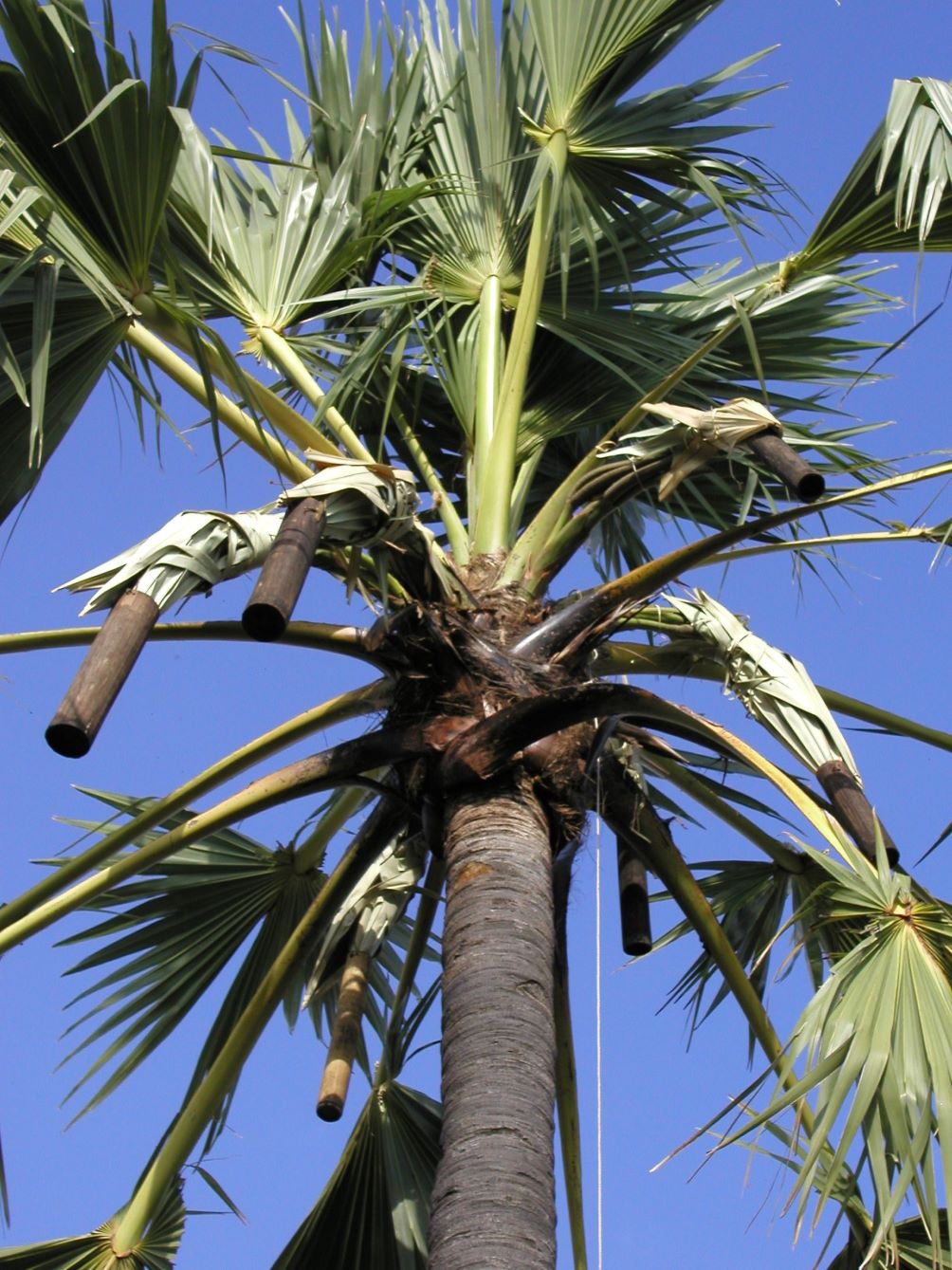
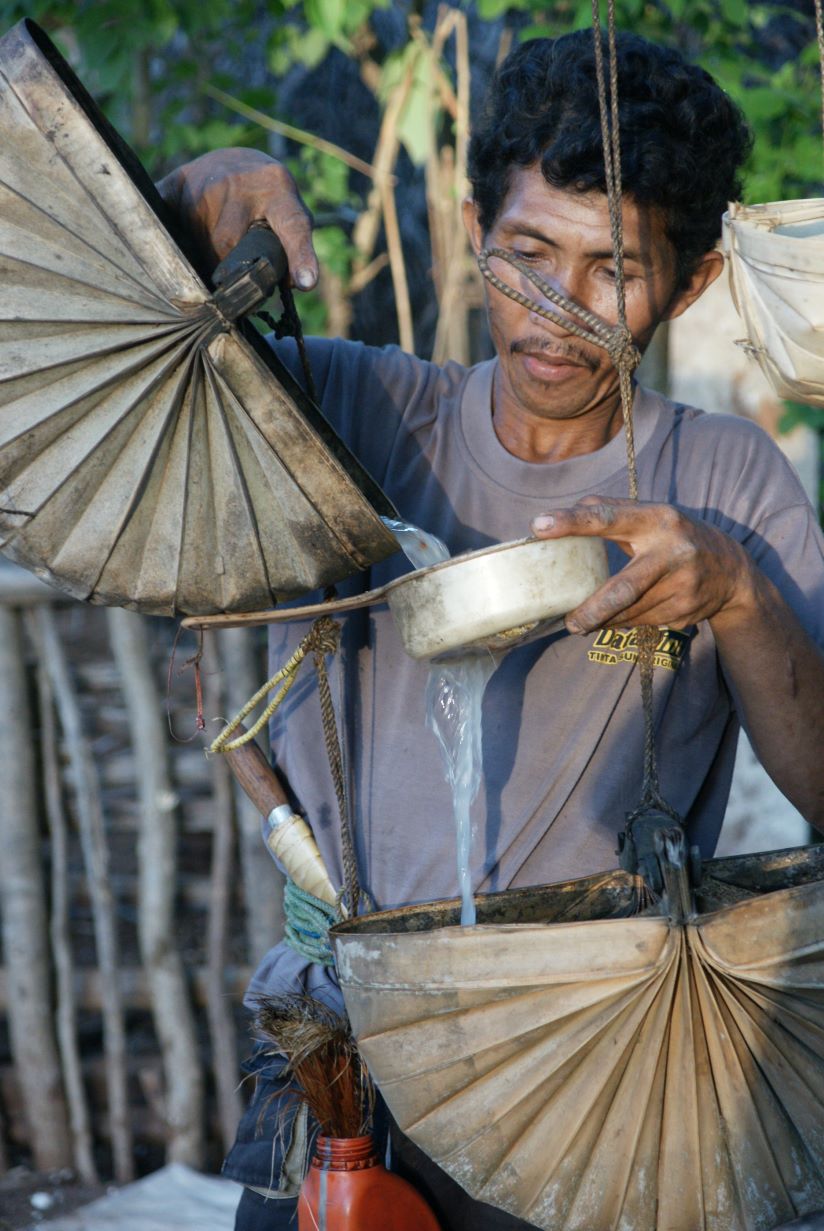
For the people of Savu, lontar palm is the tree of life and a primary source of life. The palm sap is tapped for daily consumption and can be stored as a primary source of nutrition during the dry season. Its leaves are used for roofing, containers for the sap, and woven baskets. The palm trunk is also used as a garden fence. Furthermore, the palm is featured in the hole ceremony, held annually in the Sabu-Raijua culture as a form of gratitude to ancestors.
In Bali, the sap is also used as a food source (sugar), and its flowers are used in ceremonies.
Apri Tiarsana, 29/01/2026
Prinka Saraswati, 2/02/2026.
Borassus flabellifer atau biasa disebut palem lontar, palem siwalan, atau palem kipas besar. Tanaman ini biasanya mampu tumbuh hingga tinggi kurang lebih 18 meter dan lebar 7,5 meter. Batangnya lurus, tunggal, berwarna abu-abu (berdiameter hingga 9 meter) dikelilingi bercak daun dan mahkota bulat daun menjari kaku (masing-masing sepanjang 2,4-3,5 meter) dengan tangkai berduri. Palem ini berasal dari India, Sri Lanka, dan Asia Tenggara. Bunga-bunga yang hampir putih muncul dalam kelompok yang menggantung dari ketiak daun pada akhir musim hujan hingga awal musim panas. Bunga jantan dan betina tumbuh pada pohon yang berbeda (dioesius). Bunga jantan berukuran kecil (kurang dari 1/2 inci). Bunga betina berukuran lebih besar (hingga 1 inci) dan menghasilkan buah cokelat berdaging yang agak bulat (lebarnya hingga 6-8 inci). Jenis kelamin pohon baru dapat ditentukan setelah pembungaan terjadi.
Bagi masyarakat Sabu, pohon lontar merupakan pohon kehidupan dan identitas kehidupan utama. Nira lontar disadap untuk menjadi makanan sehari-hari yang mampu disimpan sebagai sumber nutrisi utama di musim kemarau, daunnya dijadikan atap rumah, wadah untuk nira, dan keranjang anyaman, serta batangnya digunakan sebagai pagar kebun. Selain itu, lontar juga hadir dalam upacara Hole yang diadakan setahun sekali dalam budaya Sabu-Raijua sebagai bentuk syukur kepada leluhur.
Pada masyarakat Bali, lontar juga hadir sebagai sumber pangan (gula), serta bunganya digunakan sebagai sarana upacara.
Apri Tiarsana, 29/01/2026
Prinka Saraswati, 2/02/2026.

Palm - Frond
Hebe Wila Wiu